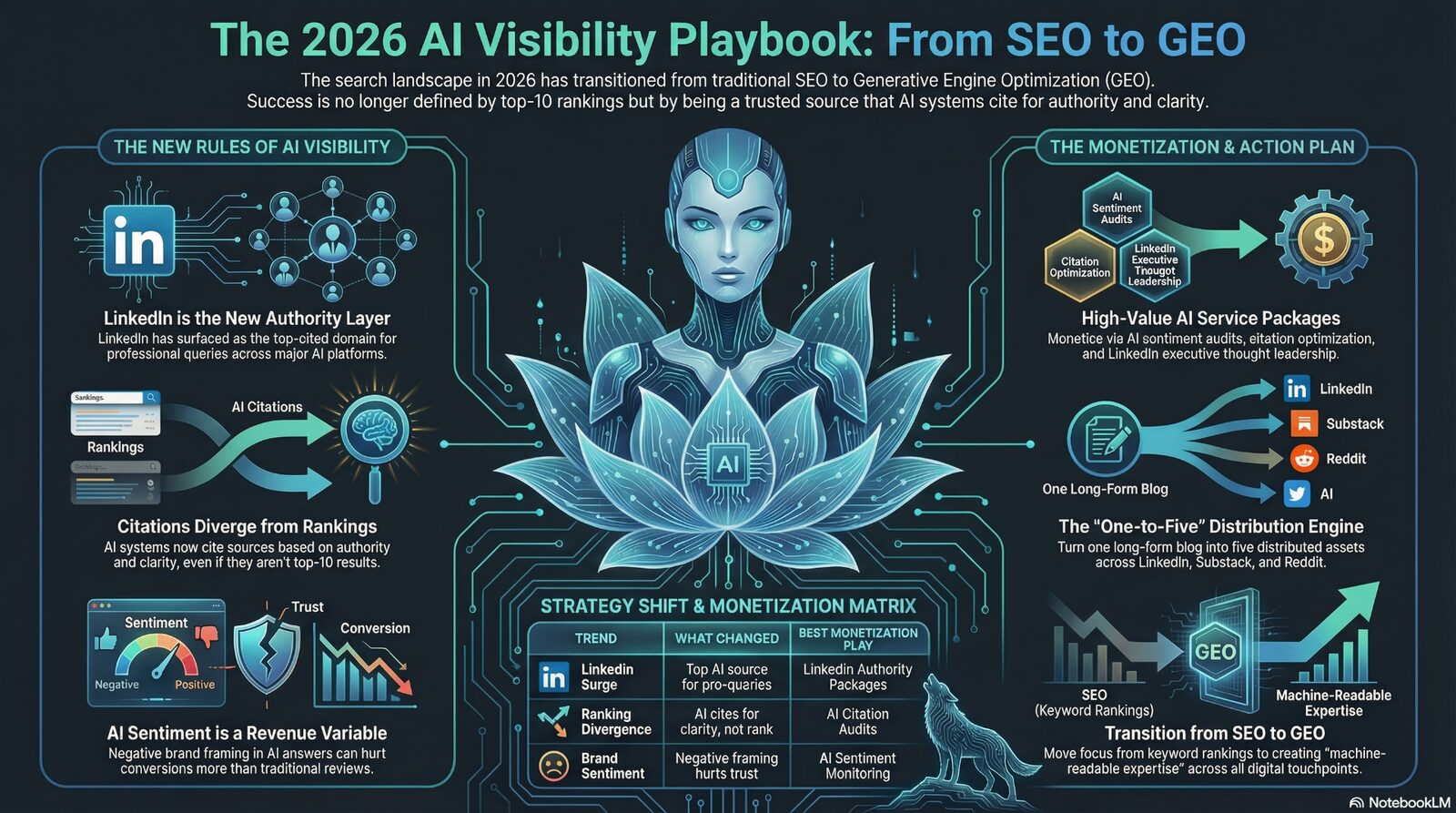
Okay, real talk. If you've been grinding away at SEO for years and suddenly feel like the ground shifted under you, you're not imagining things. AI search engines are now processing over 400 million queries per week and serving up answers without ever sending users to your site. That's not a trend, that's a tectonic shift.
I've been deep in the weeds on this for months, testing what actually moves the needle versus what just sounds good in a LinkedIn post. And here's what I keep coming back to: if your brand isn't in the AI's answer, you're invisible to a growing chunk of your market. Full stop. The brands that started building their GEO strategies in 2024? They're locking in dominance right now. The window is closing, but it's not closed yet. Let's get into it.
What Is GEO and Why It Matters More Than Rankings
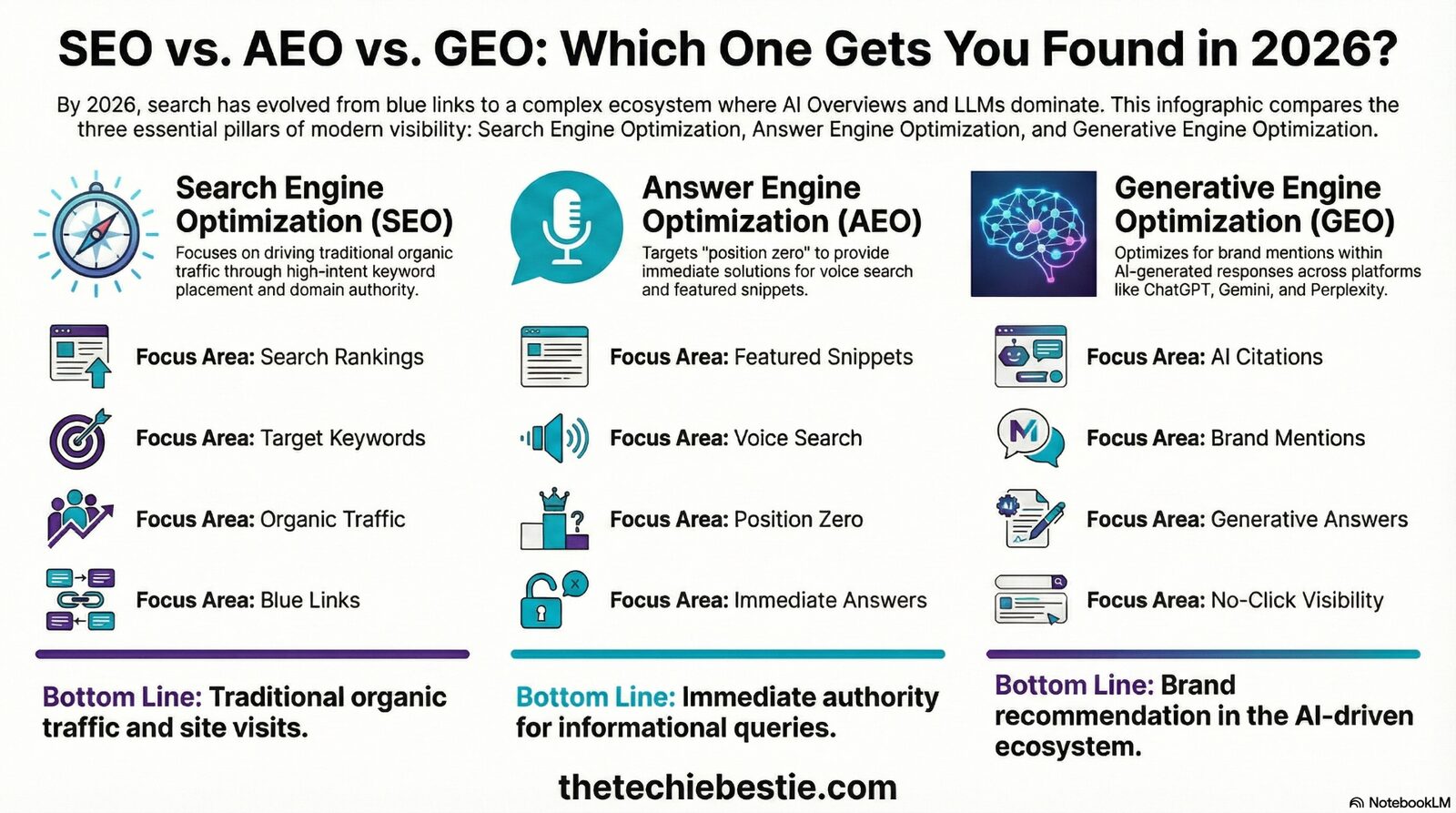
GEO stands for Generative Engine Optimization. It's the practice of structuring your content so AI engines like ChatGPT, Google Gemini, Perplexity, and Microsoft Copilot actually cite your brand when generating answers.
Traditional SEO gets you ranked. GEO gets you named. Two very different outcomes.
Here's what the data is telling us right now:
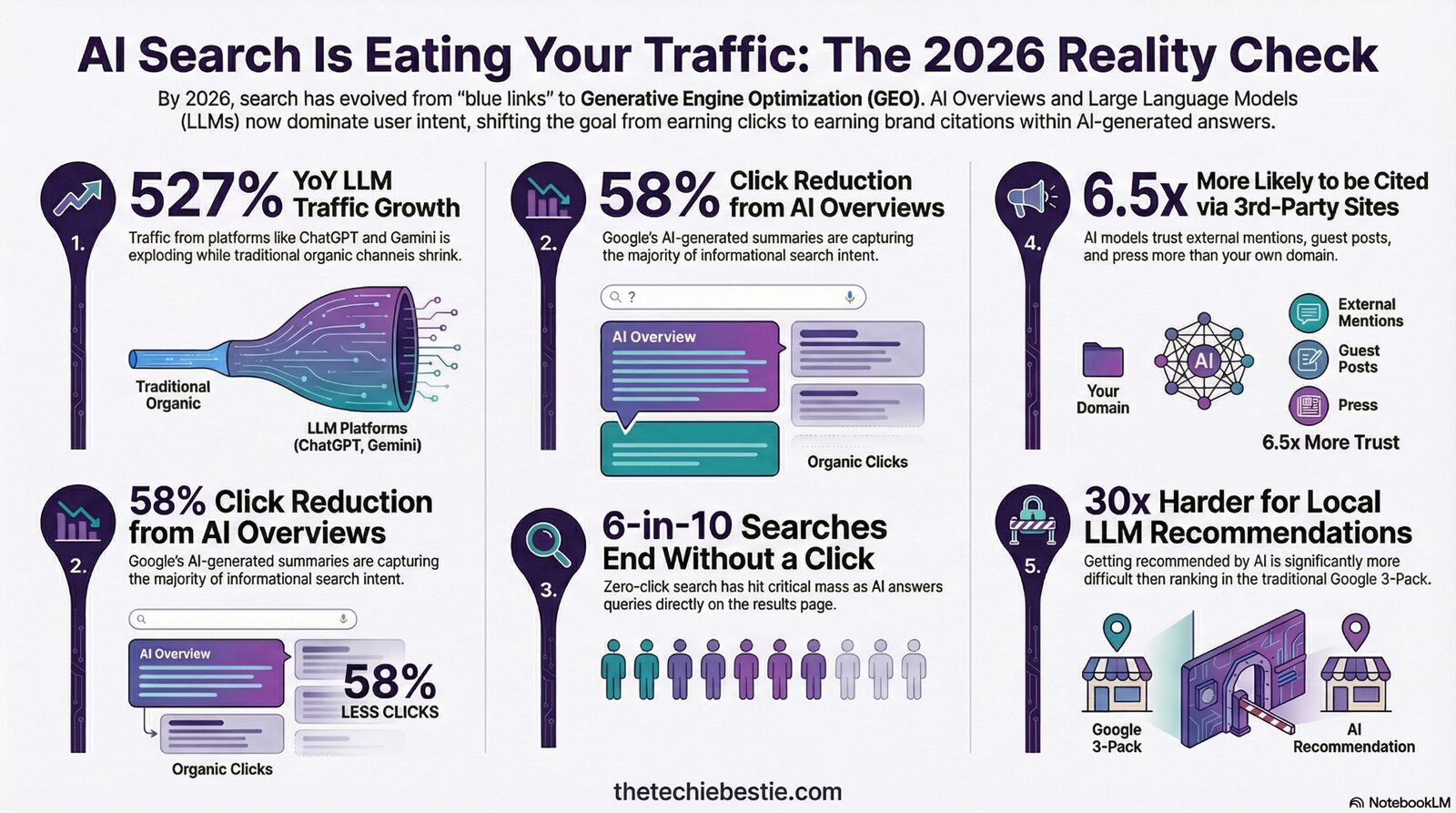
- ●AI Overviews now reach over 2 billion monthly users (Google, 2026)
- ●LLM traffic grew 527% year-over-year (SeoProfy, March 2026)
- ●Brands are 6.5x more likely to be cited through third-party sources than their own domain
- ●Content depth and readability matter more to LLMs than backlinks or traffic volume
- ●LLM inclusion for local brands is 30x harder than earning a spot in the Google 3-Pack (SOCi, 2026)
AI Search Visibility by Channel
| Channel | Inclusion Difficulty | Citation Type | Your Best Lever |
|---|---|---|---|
| Google AI Overviews | 🟡 High | Source link + summary | Rank in top 10 + structured data |
| ChatGPT | 🔴 Very High | Brand mention, often no link | Third-party coverage + reviews |
| Perplexity | 🟢 Moderate | Cited URL + inline snippet | Fresh, citable long-form content |
| Google Gemini | 🟡 High | Source card + snippet | Schema markup + entity clarity |
| Microsoft Copilot | 🟢 Moderate | Inline answer + source | Bing indexing + structured FAQs |
The GEO Optimization Framework: 5 Strategies That Actually Work
These aren't theories. These are the tactics showing up in the data, and the ones I use with every client.
1. Build Extractable Snippets
Write short, declarative answer blocks under every H2. Keep them under 50 words. Start with the question, end with the answer. AI systems pull these verbatim because they're clean, self-contained, and useful.
- ●Front-load the answer in the first sentence
- ●Use simple subject-verb-object structure
- ●Avoid filler phrases and qualifiers
- ●Keep each snippet under 50 words
2. Publish Original Data
AI systems cite primary sources over aggregators. Run small surveys. Compile your own stats. Publish your findings with a clear methodology.
- ●Survey even 50 clients for original insights
- ●Include clear methodology descriptions
- ●Present data in structured, parseable formats
- ●Update findings quarterly for freshness

3. Stack Third-Party Mentions
Brands cited in AI answers are 6.5x more likely to be pulled from third-party sources than their own site. This is where strategic content distribution becomes non-negotiable.
- ●Secure guest posts on DA 70+ domains
- ●Land digital PR placements with keyword-rich mentions
- ●Appear on industry podcasts with show notes linking back
- ●Build a citation web that teaches AI your brand belongs
4. Maintain Content Freshness
LLMs have a recency bias. 90% of all AI-cited pages carry 2025+ timestamps (SOCi, 2026). Freshness is now a citation signal, not just a ranking signal.
- ●Update existing posts with current data points
- ●Add "Last Updated" dates to all evergreen content
- ●Refresh stats and examples quarterly
- ●Archive or consolidate outdated pieces
5. Use Entity-Dense, Semantically Rich Language
AI systems use vector embeddings to measure how closely your content maps to a topic. The more entity-dense and semantically clear your writing, the better.
- ●Use consistent terminology throughout every piece
- ●Name entities clearly: people, brands, concepts
- ●Structure with clear subject-predicate-object relationships
- ●Avoid vague pronouns and ambiguous references
What Google's FACTS Framework Means for Local Visibility
SOCi's 2026 research introduced FACTS as the new model for local LLM visibility. Here's the breakdown:
- ●Freshness: Update content and your business profile regularly. Time decay penalizes stale entities.
- ●Authority: Earn certifications, awards, and expert bylines. Post visual proof.
- ●Credibility: Maintain a 4.3+ star average. Respond to every review within 48 hours.
- ●Trust: Consistent NAP. Consistent voice. Consistent brand across all platforms.
- ●Signals: Post on all social handles weekly. Keep your business profile active with photos and updates.
FAQ: GEO Questions I Get Every Week
What is the difference between GEO and SEO?
SEO gets you ranked in Google. GEO gets you named in AI-generated answers. Both matter. SEO builds the foundation. GEO builds the citation authority that AI engines use to decide which brands to trust.
How long does GEO take to work?
You can start seeing AI citation improvements in 60 to 90 days with consistent content publishing and third-party mentions. Full authority signals take 6 to 12 months to compound. Start now, this is not a sprint.
Does GEO replace traditional SEO?
No. They reinforce each other. Strong SEO rankings signal to AI that your domain is credible. GEO tactics build the brand density and topical authority that AI uses to decide who gets cited. Run both simultaneously.
Which AI engines should I optimize for first?
Start with ChatGPT and Google AI Overviews. These reach the most users. Then build toward Perplexity, which has the highest citation link rate. Microsoft Copilot follows closely.
What kills GEO performance fast?
- ●Stale content with outdated timestamps
- ●Inconsistent brand naming across platforms
- ●Zero third-party mentions or citations
- ●Missing schema markup on key pages
- ●Generic writing with no original data or POV

Conclusion
The brands winning in 2026 aren't just optimizing for Google anymore, they're optimizing for every AI system that their customers interact with. If this feels overwhelming, it doesn't have to be. This is literally what I do.
Ready to see where your brand stands? Check out my full-spectrum AI visibility services and let's build something that gets you cited, not just ranked.