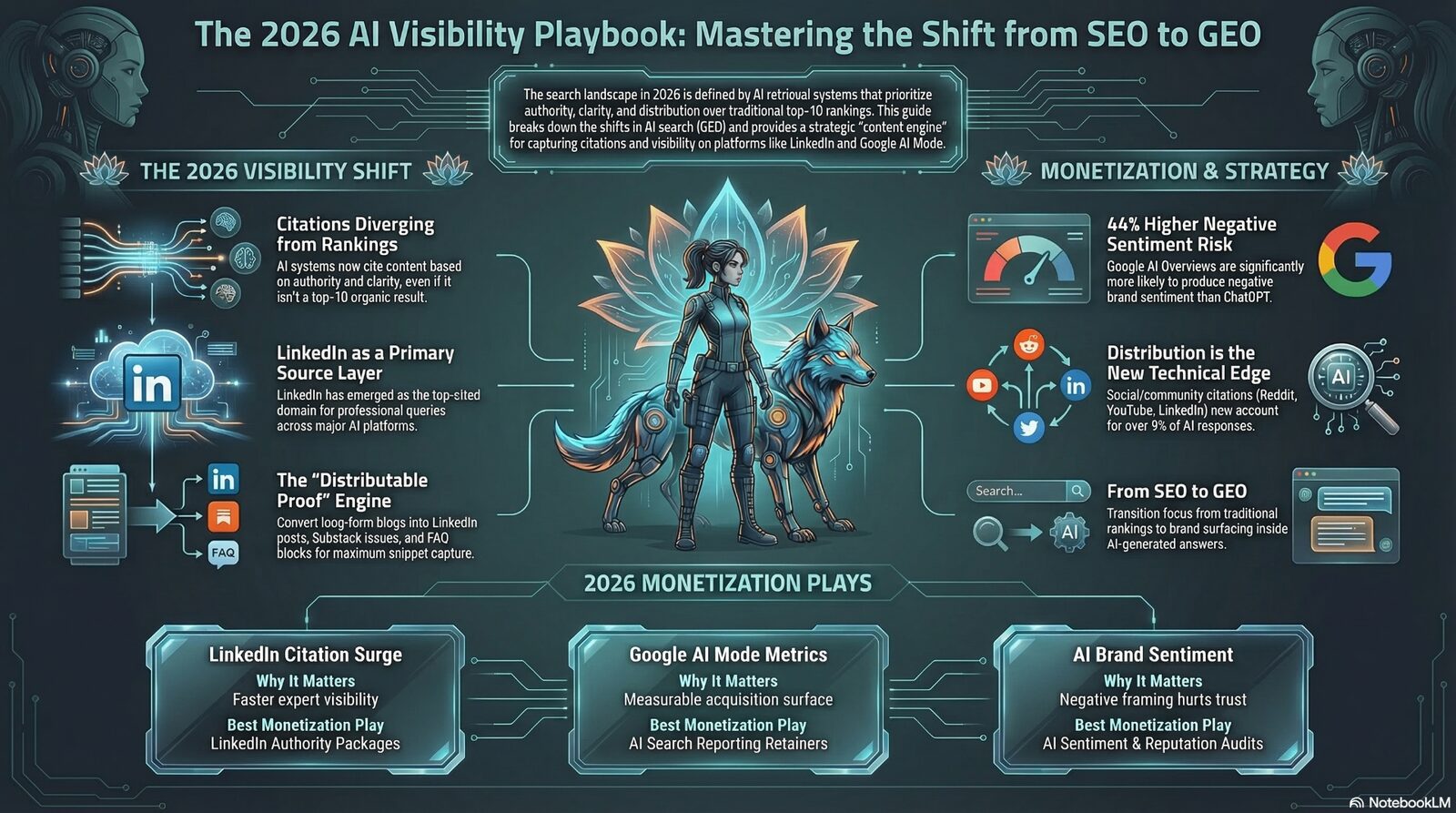
AI search is changing everything. SEO is still essential but a new discipline called GEO (Generative Engine Optimization) is emerging alongside it. 68% of commercial queries are now LLM-influenced (BrightEdge 2026).
What Is GEO?
Optimizing content to be cited by ChatGPT, Gemini, Perplexity, and Claude. GEO is not a replacement for SEO — it's the next layer. While SEO ensures your content ranks in traditional search results, GEO ensures your brand, your expertise, and your content get referenced when users ask AI assistants for recommendations, comparisons, and answers.
The shift is significant: AI-powered search engines don't just crawl and index — they synthesize. They pull from multiple sources, evaluate authority signals, and generate cohesive answers. If your content isn't structured to be cited, you're invisible in the fastest-growing search channel of 2026.
GEO vs SEO Differences
SEO ranks in Google blue links. GEO gets cited in AI answers. SEO relies on keywords, backlinks, and on-page optimization. GEO relies on authoritative sourcing, E-E-A-T signals, and structured expertise.
Here's how they compare:
| Dimension | SEO | GEO |
|---|---|---|
| Goal | Rank in SERPs | Get cited in AI answers |
| Key Signals | Keywords, backlinks, technical SEO | Authority, E-E-A-T, structured data |
| Content Style | Keyword-optimized pages | Direct-answer, expert-attributed content |
| Measurement | Rankings, organic traffic | AI citation frequency, brand mentions |
| Timeline | Months to build | Weeks to see initial citations |
The businesses winning in 2026 are doing both — using SEO as the foundation and GEO as the amplifier.
March 2026 Core Update
Google's March 2026 Core Update rewards authorship identity, original content, and topical authority. Real author bios with credentials win. Anonymous content farms are getting crushed.
Key changes in this update include stronger weight on verified author credentials, preference for original research and first-person expertise, and penalties for AI-generated content that lacks human editorial oversight. If you don't have a real human expert attached to your content, you're losing ground fast.
Top 3 GEO Signals
1. Direct-Answer Content
Structure your content to directly answer questions. Use clear headers, concise definitions, and scannable formatting. AI engines pull from content that provides immediate, authoritative answers — not content buried in fluff.
2. Third-Party Authoritative Mentions
Get cited by other reputable sources. Guest posts on industry publications, podcast appearances, conference speaking — these all create the kind of third-party signals that AI engines use to validate your expertise.
3. Robots.txt Allowing AI Crawlers
Make sure your robots.txt allows GPTBot, ClaudeBot, and PerplexityBot to crawl your site. Many businesses are accidentally blocking AI crawlers, making themselves invisible to the very engines they need to appear in.
GEO Checklist
Here's your actionable GEO checklist for Q2 2026:
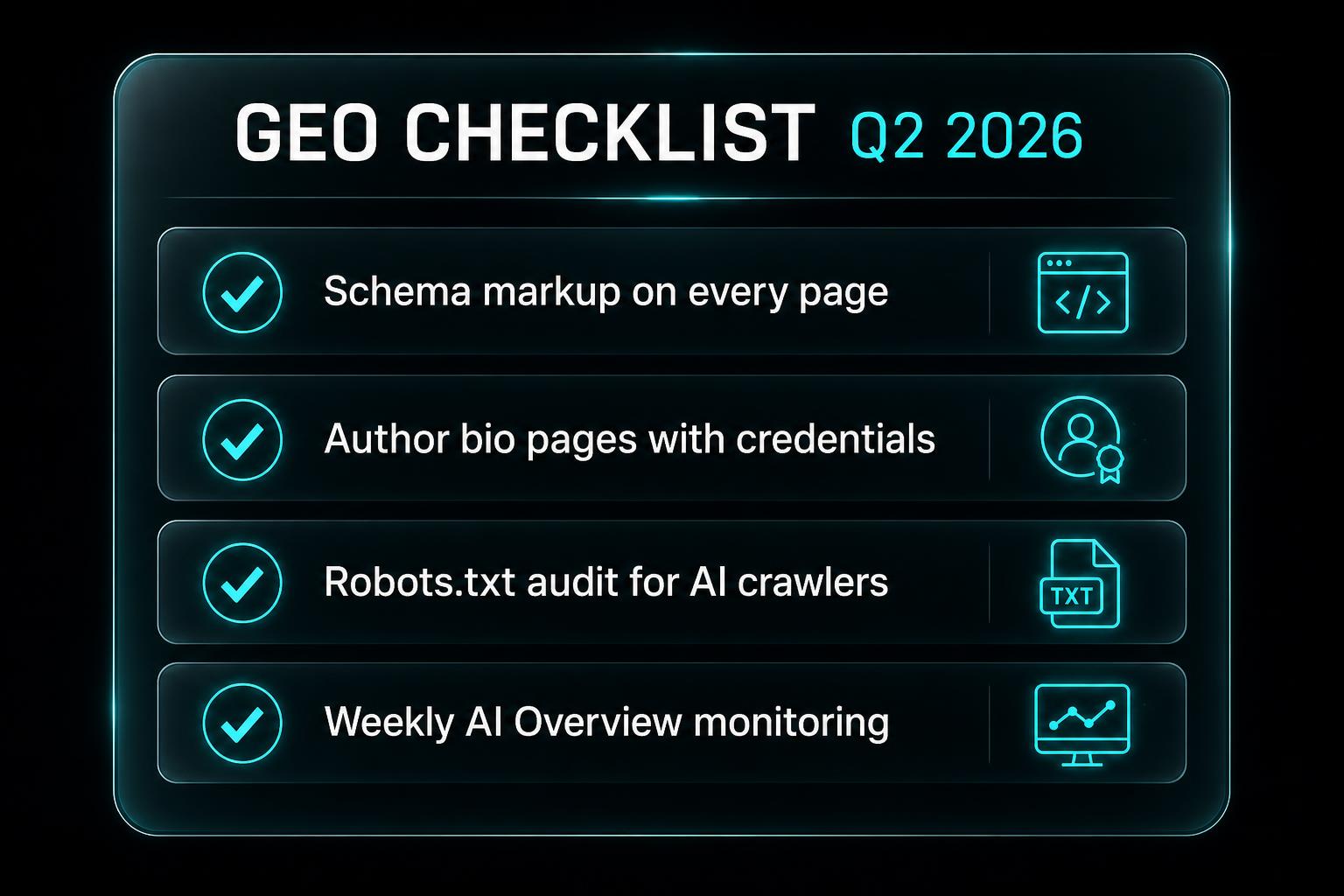
- ●Schema markup on every piece of content so AI engines can parse your entities, authors, and offerings.
- ●Author bio pages with credentials, headshots, and links to published work to build the E-E-A-T signals AI models reward.
- ●A robots.txt audit to ensure AI crawlers (GPTBot, ClaudeBot, PerplexityBot, Google-Extended) actually have access.
- ●Weekly AI Overview monitoring to track where your brand appears in AI answers, and where it doesn't.
GEO is projected to drive up to 40% of organic traffic by end of 2026. The businesses that start now will own the AI-powered search landscape. The ones that wait will wonder where their traffic went.
Ready to get ahead of the curve? Book a free Techie Bestie strategy session and let's build your GEO + SEO game plan together.