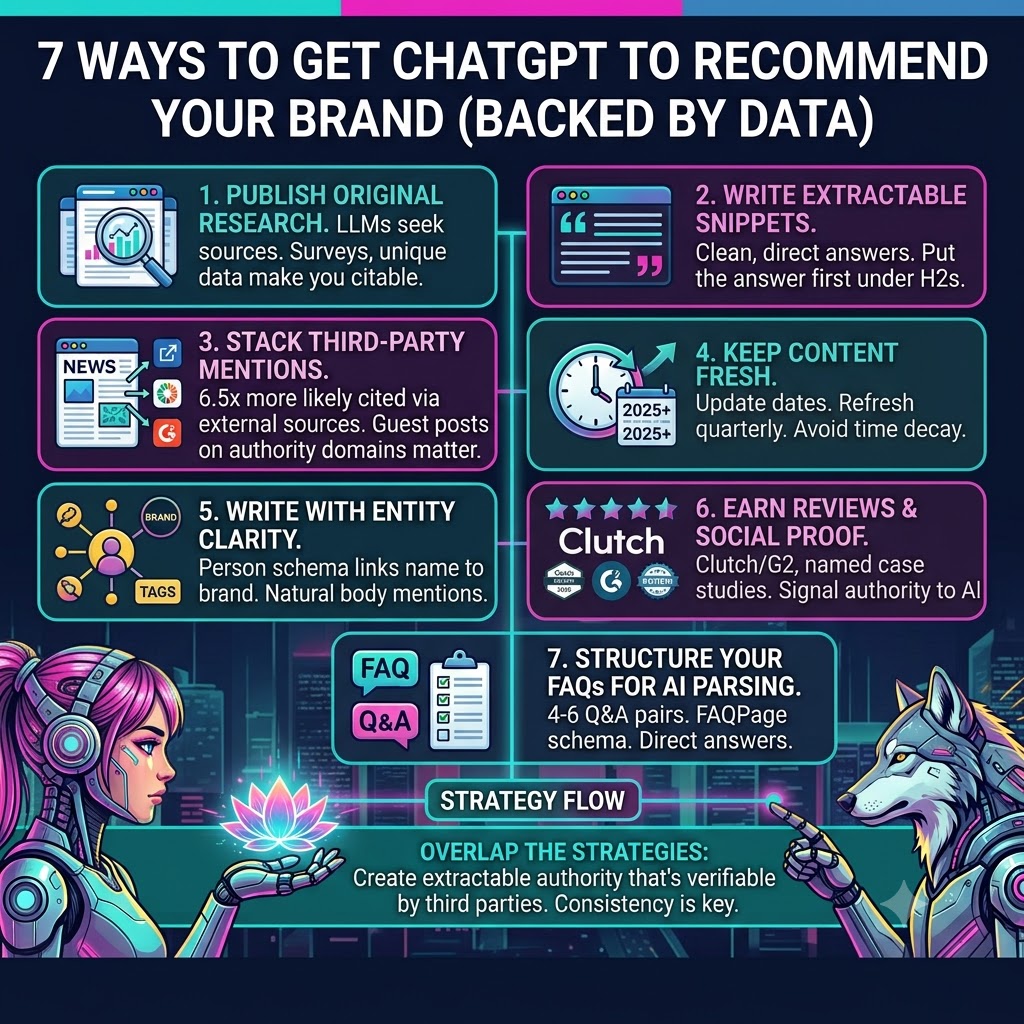
Getting cited in ChatGPT is the new backlink. AI search platforms now serve 400 million users per week, and brands that appear in their answers gain visibility without relying on a single click. Here is exactly how to make that happen.
Most brands are invisible to ChatGPT. Not because they lack quality, but because they lack the right signals. LLMs do not rank pages the way Google does. They evaluate topical depth, entity clarity, content freshness, and third-party validation. The brands being recommended right now built those signals intentionally. This guide breaks down the seven tactics that move the needle fastest, backed by the data that explains why they work.
Why ChatGPT Citations Are the New Backlinks
In traditional SEO, a backlink from an authoritative domain passes trust and ranking power to your site. In AI search, a citation from ChatGPT, Perplexity, or Google Gemini passes something more valuable: brand recall at the moment of decision.
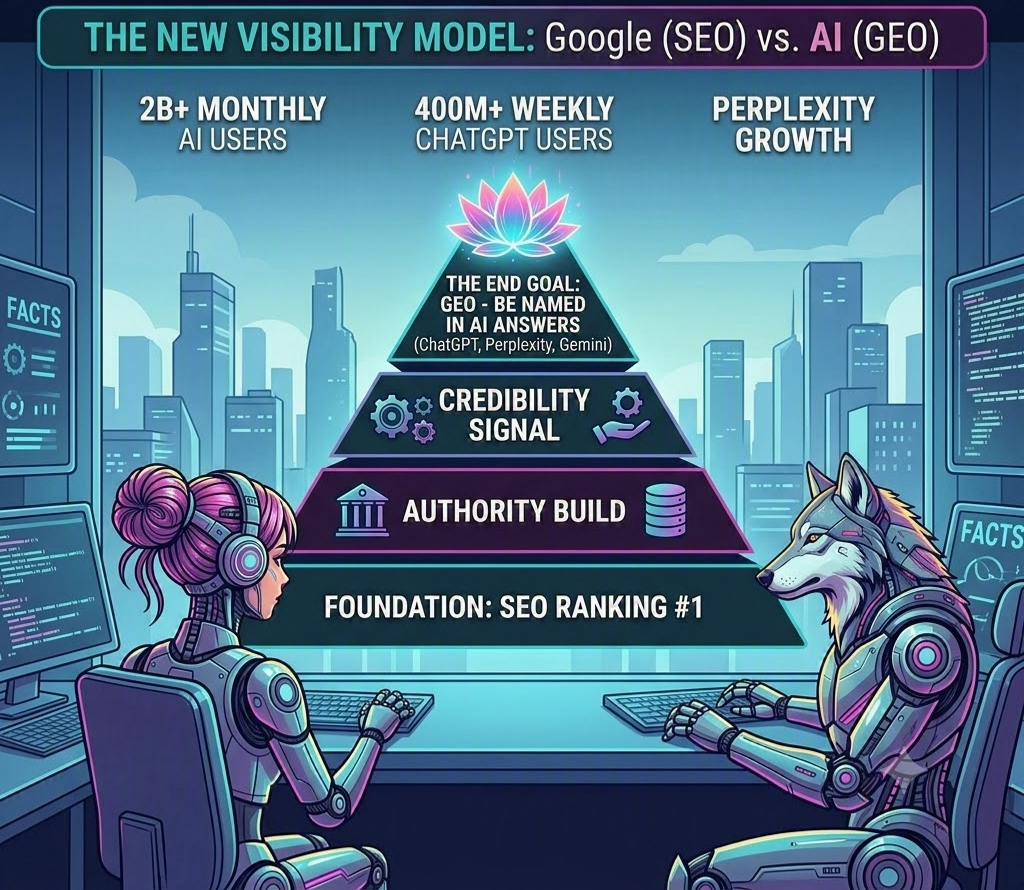
Consider the data:
| Fact | Number | Source |
|---|---|---|
| ChatGPT weekly active users | 400 million | OpenAI, 2026 |
| LLM traffic growth year over year | +527% | SeoProfy, 2026 |
| Brands cited via 3rd-party sources vs. own domain | 6.5x more likely | Ahrefs, 2025 |
| AI Overviews click reduction | -58% | Ahrefs, 2026 |
| Searches ending without a click | ~6 in 10 | SeoProfy, 2026 |
A ChatGPT citation is not just visibility. It is authority by association. When an AI recommends your brand, the user''s trust transfers. That is worth more per interaction than most PPC clicks.
How ChatGPT Decides Who to Cite
| Factor | Weight in Google SEO | Weight in ChatGPT Citation |
|---|---|---|
| Backlinks and domain authority | Very High | Low to Moderate |
| Content depth and word count | High | Very High |
| Original data and research | Moderate | Very High |
| Third-party brand mentions | High (for links) | Very High (for citations) |
| Content freshness (timestamp) | Moderate | High |
| Entity clarity (who wrote it) | Moderate | High |
| Readability score | Moderate | High |
| Structured data / Schema | High | Moderate |
The takeaway: ChatGPT rewards depth, freshness, and third-party validation over raw domain authority. A well-structured brand with genuine expertise and external coverage can outrank a high-DA competitor in AI answers.
7 Tactics to Get ChatGPT to Recommend Your Brand
Tactic 1: Publish Original Data
AI systems are primary-source seekers. Content that references its own original research, a survey of 50 clients, a benchmark you ran, data you compiled from first-hand experience, gets cited at dramatically higher rates than content that aggregates stats from elsewhere.
- ●Run a quick survey with 20 to 50 respondents and publish the results with a clear methodology
- ●Create a benchmark report from your own client work, anonymized, but specific
- ●Compile publicly available data into a structured original analysis with your interpretation
- ●Label the data clearly: "According to The Techie Bestie''s analysis of 50 B2B SaaS content audits..."
Tactic 2: Build Extractable Snippets
ChatGPT and Perplexity pull content verbatim when it is formatted as a clean, self-contained answer. Write one of these beneath every H2 in your blog posts.
- ●Lead with the direct answer in 1 to 2 sentences, under 60 words total
- ●Use the question itself as the H3 heading (schema-first thinking)
- ●Avoid metaphors and qualifiers in the answer block, AI needs declarative statements
- ●Follow the snippet with supporting depth, the AI cites the snippet, readers get the depth
Tactic 3: Stack Third-Party Mentions
Brands are 6.5 times more likely to be cited by AI from third-party sources than from their own domain. This is the single most important distribution insight in GEO strategy.
- ●Guest post on DA 70+ domains in your niche, Search Engine Land, Moz, HubSpot, Semrush blog
- ●Get featured in podcast interviews, audio transcripts are indexed and crawled
- ●Earn PR placements and journalist mentions in industry publications
- ●Contribute quotes to roundup articles, your name + brand becomes a citable entity
- ●Answer questions on Reddit and Quora in threads that rank, LLMs scrape these heavily
Tactic 4: Keep Content Fresh
LLMs have a measurable recency bias. 90% of AI-cited pages carry 2025 or later timestamps, according to SOCi''s March 2026 research. Freshness is no longer just a Google signal, it is an AI citation signal.
- ●Add a "Last Updated" date to every blog post and update it when you add new data
- ●Set a quarterly refresh schedule, new stats, new internal links, one new section
- ●Republish updated posts as new content with the updated date visible in the HTML
- ●Time decay penalizes stale content, even strong pieces lose citation probability over 18 months
Tactic 5: Write With Entity Clarity
LLMs use vector embeddings to understand who wrote a piece of content and whether that entity is associated with a topic. If your content does not clearly establish your brand as the named author and your topic area as your domain, AI systems cannot confidently attribute it to you.
- ●Include your full name and brand name in the author block with schema markup
- ●Add Person schema to your site linking your name to your brand and your topical areas
- ●Use consistent terminology across all content, pick your terms and stick to them
- ●Reference your brand name naturally within the body of the content, not just the byline
Tactic 6: Earn Reviews and Social Proof Signals
ChatGPT requires an average star rating of 4.3 or higher to recommend a local brand, according to SOCi''s 2026 data. For B2B brands, the equivalent signal is third-party reviews, testimonials, and case study mentions on external platforms.
- ●Collect and publish client testimonials with permission, specific outcomes, not vague praise
- ●Request reviews on Google Business Profile, Clutch, G2, or Upwork
- ●Publish case studies with before/after data, these become primary citation sources for AI
- ●Get mentioned in "best of" and "top freelancer" lists on DA 60+ domains
Tactic 7: Structure FAQs for AI Parsing
FAQ sections are disproportionately likely to be extracted by AI systems. A well-structured FAQ with FAQPage schema markup tells both Google and LLMs that your content contains verified, authoritative answers to specific questions.
- ●Include 4 to 6 FAQ pairs at the end of every blog post
- ●Write questions in natural language, how people actually speak and search
- ●Keep answers to 40 to 60 words, extractable and self-contained
- ●Add FAQPage JSON-LD schema to every page with an FAQ section
- ●Include one data point or attributed stat in at least half of your answers
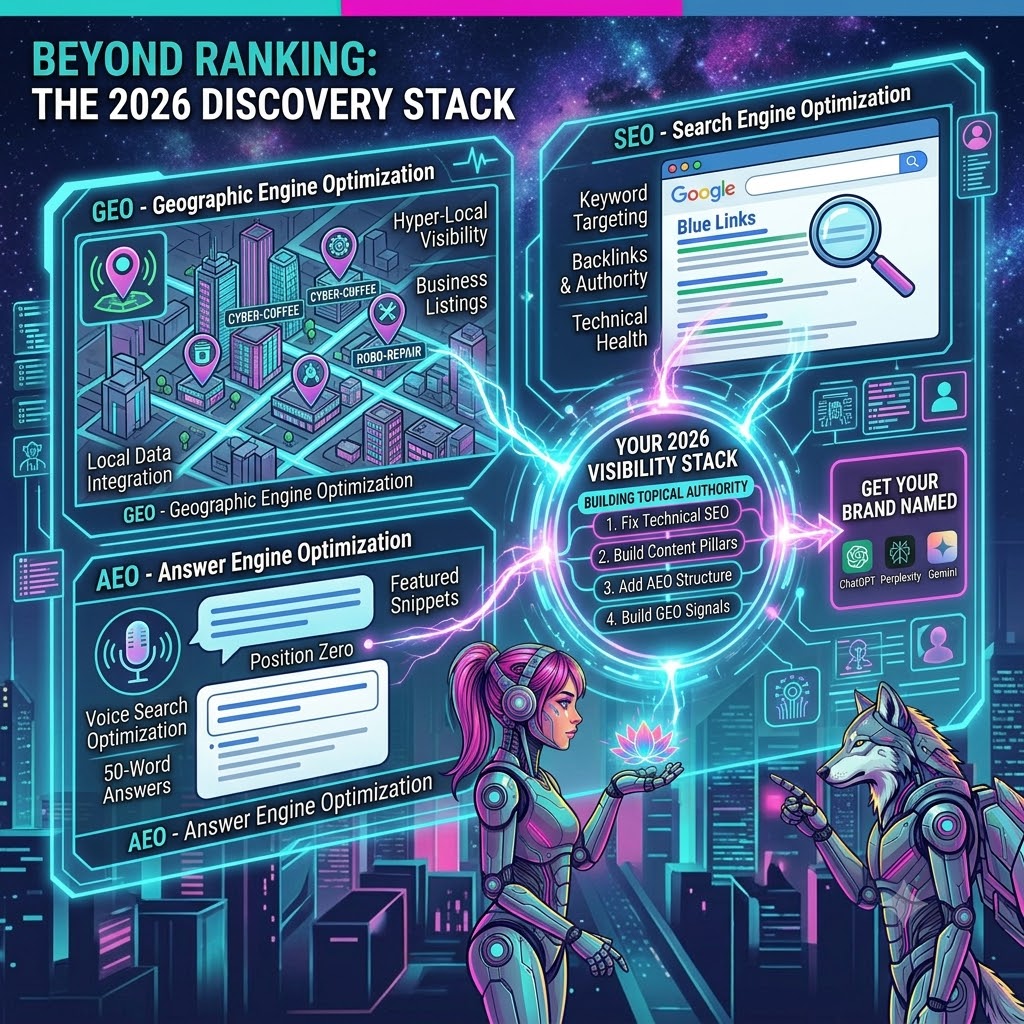
How to Track Your ChatGPT Brand Citations
You cannot optimize what you cannot measure. These tools track how often your brand appears in AI-generated answers:
| Tool | What It Tracks | Price |
|---|---|---|
| Evertune | AI brand score across ChatGPT, Gemini, Perplexity + competitor benchmarking | Contact for pricing |
| Goodie AI | Brand citations, sentiment, content recs across all major LLMs | From ~$85/month |
| Brandwatch / Mention | Brand mentions across web including AI-generated content | Paid plans |
| Manual testing | Run your brand + competitor queries in ChatGPT, Perplexity, Gemini weekly | Free, time investment only |
FAQ: Getting Your Brand Into ChatGPT
How long does it take to start appearing in ChatGPT answers?
With consistent content publishing and active third-party mention building, brands typically see first AI citation appearances in 60 to 90 days. Full brand authority that produces regular unprompted citations takes 6 to 12 months of sustained effort.
Does having a high domain authority guarantee ChatGPT citations?
No. ChatGPT citation factors differ from Google ranking factors. High DA helps establish baseline credibility, but content depth, original data, freshness, and third-party mentions are weighted more heavily by LLMs than backlink profiles.
Can small brands compete with large companies for ChatGPT visibility?
Yes. LLMs evaluate topical authority and content quality more than brand size or marketing budget. A solo operator who publishes original research and earns consistent third-party mentions can outrank a Fortune 500 brand in AI-generated answers for a specific niche topic.
What types of content get cited most often by ChatGPT?
Original research and benchmark data, clearly structured how-to content, expert opinion pieces with named attribution, FAQ-format content with direct answers, and comparison articles that evaluate multiple options systematically. Lists and tables are extracted at significantly higher rates than prose paragraphs.
Should I block AI crawlers from my site?
Only if your content model depends on paywalled exclusivity. Blocking AI crawlers means AI platforms cannot learn from or cite your content. For brands building GEO authority, allowing AI crawl access is essential. Blocking GPTBot, ClaudeBot, and PerplexityBot removes you from the citation pool entirely.
Build Your Brand''s AI Visibility Starting Now
The Techie Bestie builds GEO and AI citation strategies for B2B brands, fintech companies, SaaS products, and service businesses. Solo operator. Bloomberg-trained. AI-native from day one.
Download the free 10-Point GEO Audit Checklist or book a strategy call at thetechiebestie.com.
Related Reading on The Techie Bestie:
- ●GEO vs SEO vs AEO: Which One Gets You Found in 2026? (Week 1 pillar)
- ●GEO Tools Roundup 2026: Evertune, Goodie AI, FluxSERP
- ●My Exact AI Content Workflow With Claude
- ●SeoProfy: New AI SEO Statistics Highlighting Key Marketing Trends for 2026, LLM traffic and zero-click data
- ●SOCi: Local SEO Trends March 2026, FACTS Framework, AI citation difficulty data
- ●Search Engine Land: Why LLM Perception Drift Will Be 2026''s Key SEO Metric, AI brand score tracking methodology
- ●Ahrefs: AI Overviews Study 2026, click reduction and citation source data